

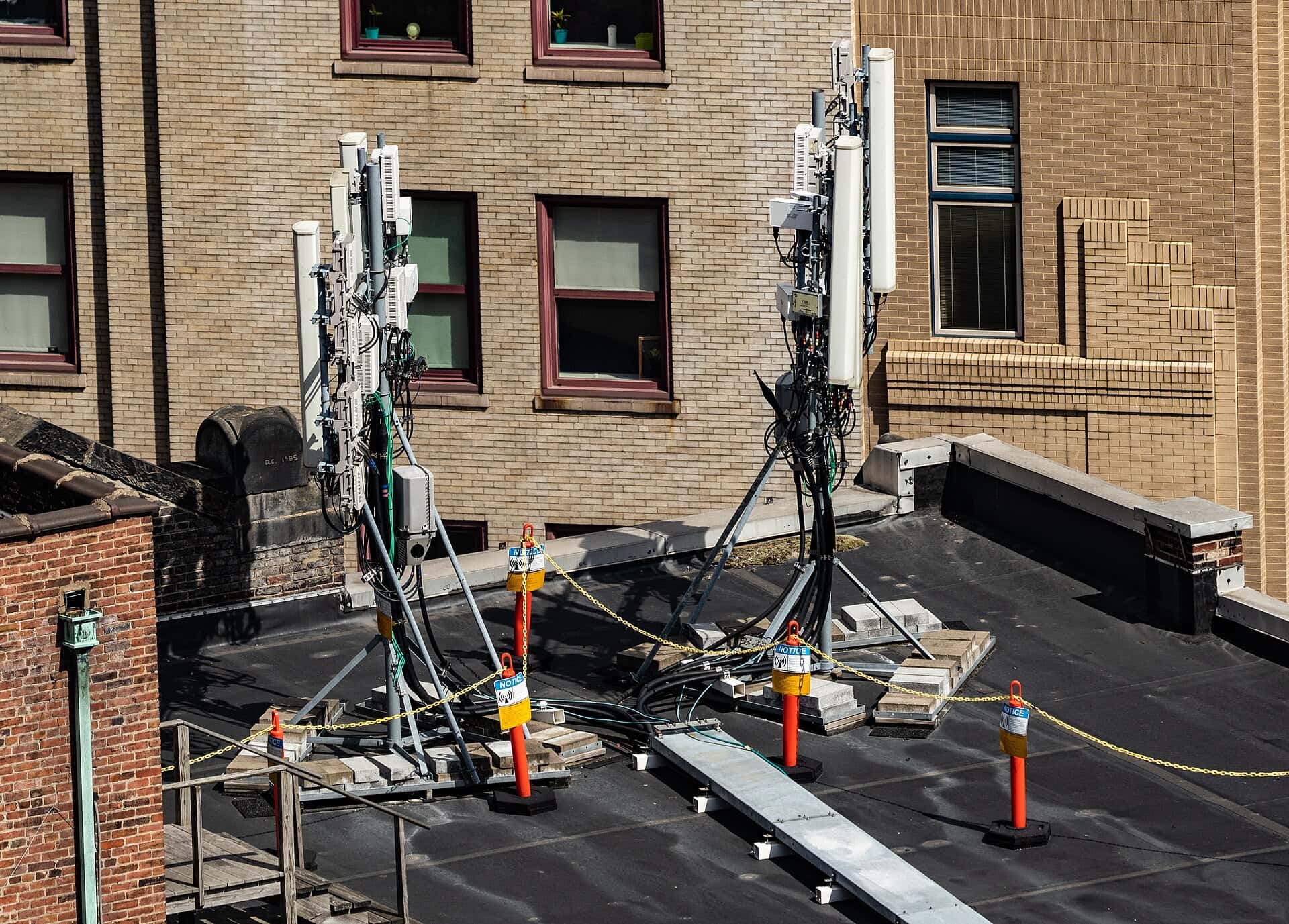
Your own mobile network on your own site, with guaranteed capacity and full control.
A private mobile network runs on licensed spectrum that only you use. That makes capacity predictable, latency low and coverage across large sites better than Wi-Fi will ever manage. We design the radio plan, arrange the spectrum, build the network and manage it afterwards.
Who it is for
- Factories and production sites with AGVs, scanners and machines that cannot drop offline
- Ports, distribution centres and logistics sites with a lot of outdoor space
- Campuses and large sites where Wi-Fi needs too many access points and too much maintenance
Private 5G explained
What private 5G is, when it fits and what it costs
What is private 5G?
Private 5G is a mobile network that belongs to you alone. It uses the same technology as a telecom operator's network, but on your own site, with your own antennas, your own core network and your own SIM cards. Only devices with your SIM get on. Because the network runs on licensed frequencies assigned to you on your parcel, you share the capacity with no one and the connection is predictable, outdoors and over long distances too.
Private LTE or private 5G: what is the difference?
Private LTE uses 4G technology, private 5G the newer 5G technology. LTE is mature and supported by almost all devices, scanners and routers. 5G offers more capacity and shorter response times, and is the logical choice for new equipment and demanding applications. We build both. The choice follows from the devices you want to connect and what they need to do; we take stock of those beforehand.
Private 5G, Wi-Fi or the public mobile network?
| Private 5G or LTE | Business Wi-Fi | Public 4G or 5G | |
|---|---|---|---|
| Frequencies | Licensed, yours alone | Unlicensed, shared with the surroundings | The operator's, shared with all customers |
| Coverage outdoors and on large sites | Long range with few antennas | Many access points needed | Depends on nearby masts |
| Predictability | High: only your devices | Varies with crowding and interference | Varies, especially when busy |
| Control | Full: you decide who and what | Full | With the operator |
| Moving devices | Seamless between antennas | Roaming between access points can stutter | Seamless |
| Fits | Sites, halls, vehicles, machines, cameras | Offices, indoor spaces, guests | Individual devices without a network of your own |
It is rarely one or the other. On most sites Wi-Fi remains the right choice for the office and guests, and private 5G takes over everything that must not drop or that moves across the site.
What does private 5G cost?
- The licence from the Dutch regulator RDI costs 271 euros once and 102 euros per year in 2026, and is valid until the end of 2040.
- A small setup can be built for under 10,000 euros.
- Because we use our own core network, you pay a fixed fee per SIM and no licence per user or per bandwidth.
- You choose between new and refurbished hardware.
- Management is available as a service, or you hand it over to your own team.
How a project runs
- Inventory: which devices need to connect, where they move, and which data may not leave the site.
- Survey and radio plan: we measure on site and determine where the antennas go.
- Licence: we handle the application with the RDI for your parcel.
- Trial: three months on the same hardware as the final network, at a reduced rate.
- Final network: the trial setup stays and is extended to full coverage.
- Management: monitoring and an incident line, or handover to your own team.
Temporary too: events and construction sites
A private mobile network does not have to be permanent. At events and construction sites we deploy it temporarily for everything that must not fail. Such a network can cover the whole site within a few hours, and visitors have no influence on it because their phones are not on it.
What you get
What is included with Private LTE & 5G
Radio planning and site survey, so coverage is measured before an antenna goes up
Spectrum application with the Dutch Authority for Digital Infrastructure, together with you
Core network locally on your site or centrally in our data centre, depending on whether data may leave the site
Nokia antennas and SIM cards or eSIM for your devices and machines
Our own management software and core technology: a fixed fee per SIM, no licence per user or per bandwidth
Integration with your existing IT, firewalls and monitoring
Three month trial with the same hardware as the final network, at a reduced rate
Management with monitoring and an incident line, or handover to your own team
Our own software
Our own core and management software, so no licence per user or per bandwidth.
For Private LTE and 5G we combine Nokia antennas with our own in-house software for the core network and management. That means we are not tied to a manufacturer's licences per user or per bandwidth. You pay a fixed fee per SIM, and we pass on the rest of the saving.
Core under our own control
The core runs locally on your site or centrally in our data centre. You decide whether data leaves the site.
Management to fit
One portal for SIM cards, coverage, capacity and incidents, set up around your processes instead of a manufacturer's standard.
No vendor lock-in
Antennas and devices from different manufacturers run on the same core. Switching or expanding does not mean rebuilding the network.
Predictable cost per SIM
You pay a fixed fee per SIM card, not per user or per bandwidth. A hundred more scanners or sensors means a hundred more SIMs, and nothing else.
Test Private 5G for three months on your own site.
We build a trial setup with the same antennas and core as the final network, at a reduced rate. If it works for you, the setup stays and becomes the final network.
Free guide
Receive the Private 5G guide
A short guide on spectrum, coverage, cost and whether Private 5G fits your site. Leave your details and we send it over.
Receive the Private 5G guide
A short guide on spectrum, coverage, cost and whether Private 5G fits your site. Leave your details and we send it over.
Technology partners
Our technology ecosystem








Frequently asked questions
Questions about Private LTE & 5G
How is this different from business Wi-Fi?
Wi-Fi runs on unlicensed spectrum and shares the air with everyone around you. Private 5G uses licensed spectrum that only you use, with predictable capacity and better coverage outdoors and over long distances.
Do we need a licence?
In the Netherlands spectrum is available for local networks. We handle the application together with you and make sure the network stays within the conditions.
Will our existing devices work on it?
Many modern devices support the frequency bands used. We take stock of your equipment beforehand and advise where a router, gateway or different SIM is needed.
Can we try Private 5G first?
Yes. We build a three month trial at your location with the same hardware intended for the final network, at a reduced rate. If it works for you, the setup stays and becomes the final network.
Where does the core network sit?
You decide. If data must not leave the site, we place the core locally. If you want less equipment on site and central management, the core runs in our data centre.
How do you keep costs down?
We use our own software for management and the core technology. You pay a fixed fee per SIM and no licences per user or per bandwidth to a manufacturer. We pass that saving on.
What does a private 5G network cost?
A small setup can be built for under 10,000 euros. The Dutch licence costs 271 euros once and 102 euros per year in 2026. In addition you pay a fixed fee per SIM, without a licence per user or per bandwidth.
What is the difference between private LTE and private 5G?
Private LTE uses 4G technology and is supported by almost all devices. Private 5G offers more capacity and shorter response times. The choice depends on the devices you want to connect; we build both.
Can private 5G be temporary, at an event or construction site?
Yes. A temporary private mobile network can cover the whole site within a few hours. Visitors have no influence on it, because only devices with our SIM get on.
Does private 5G replace our Wi-Fi?
Usually not. Wi-Fi remains suitable for the office and guests. Private 5G takes over the applications that must not drop or that move across the site, such as vehicles, scanners, machines and cameras.
Sectors
Used in these sectors
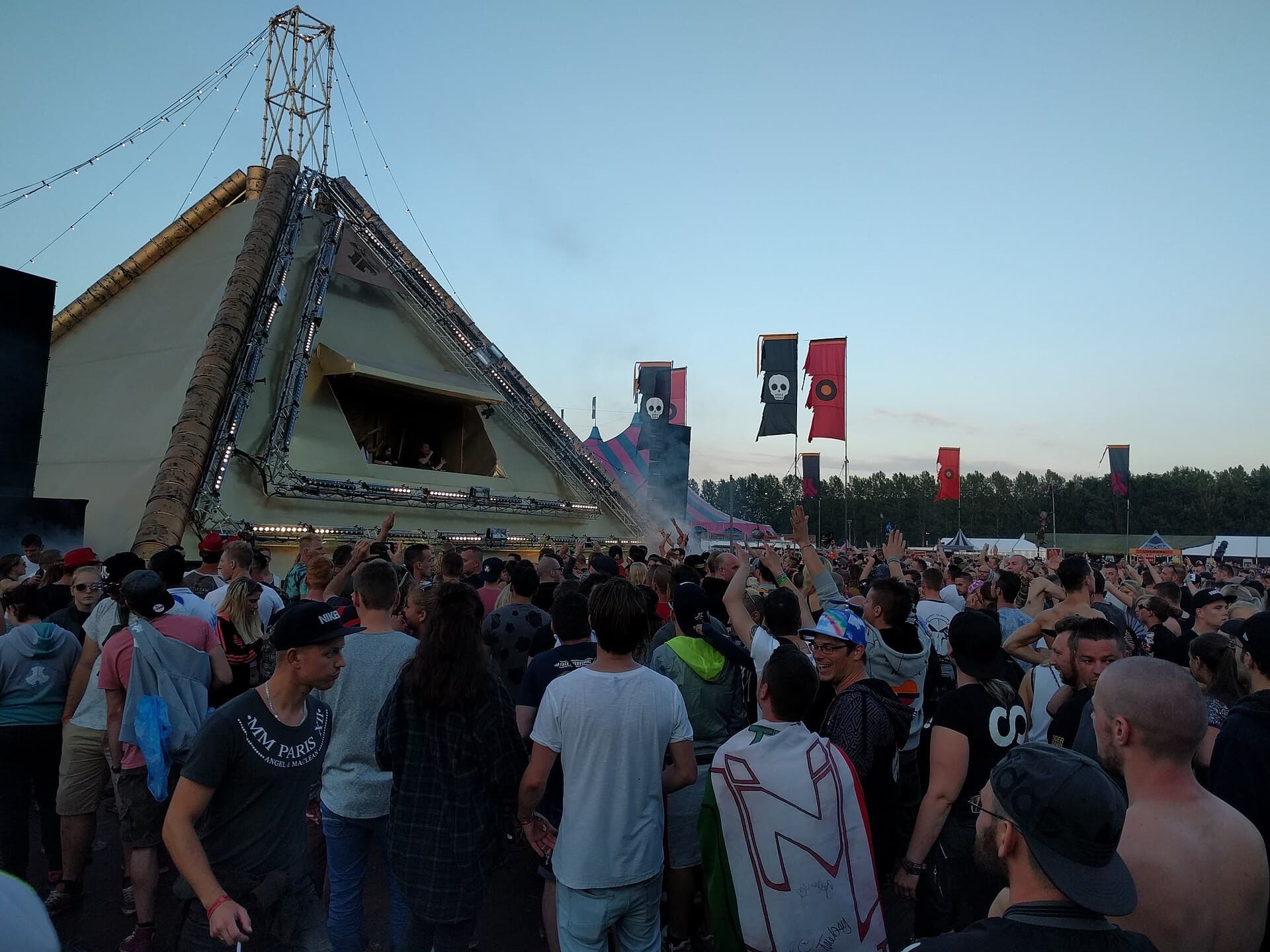 Events and festivalsTemporary internet, Wi-Fi for crew and visitors, payments and tills, streaming and production.Read more
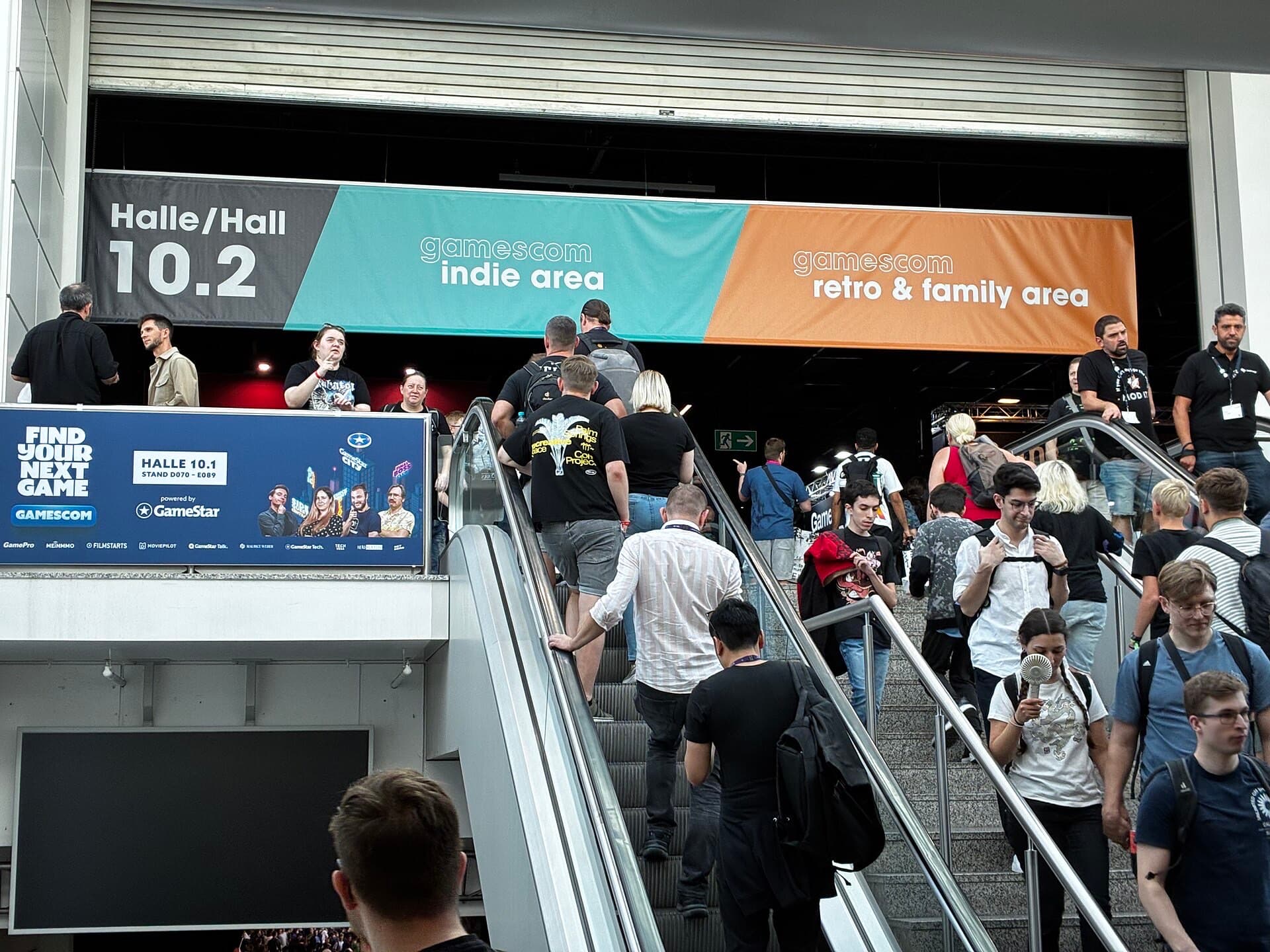 Venues and exhibition centresPermanent networks for venues and exhibition halls, with a platform where exhibitors order their own connection.Read more
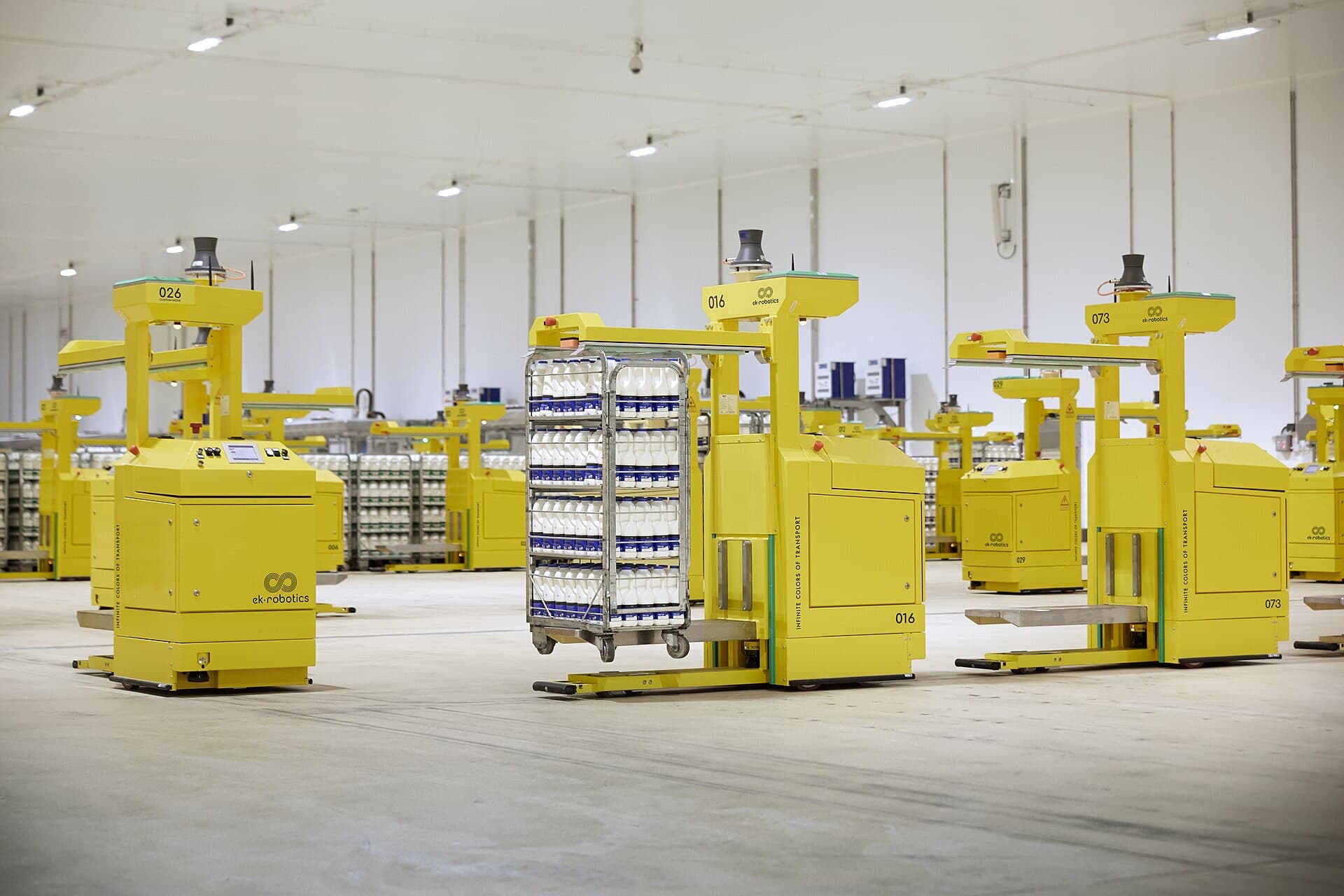 Industry and logisticsPrivate 5G for AGVs, scanners and machines that cannot drop offline.Read more
 HealthcareWi-Fi and cabling for care locations where medical equipment, staff and residents need to be online at the same time.Read more
 MaritimePrivate 5G, managed Wi-Fi and a managed firewall for ports, shipyards and vessels, built on a stable inbound connection.Read more
Related solutions
Related services
Our strength lies in tailored solutions. Discover in which other areas we can support your IT team.
- Enterprise networking & wirelessWired and wireless network for office, warehouse or venue: switches, access points and management from one environment.
- Data centre & cloud networkingNetwork fabric for your data centre and the link to cloud environments, built on redundancy and automation.
- Secure SD-WANCombine several connections between locations intelligently, with encryption and per-application steering.
- Service provider networkingNetworks for providers and ISPs: core, aggregation and access, built on carrier grade equipment and our own 4G/5G core.
- CablingCopper and fibre cabling, patch cabinets and test reports. Neat, labelled and certified.
- ColocationYour servers and equipment in a secure data centre with redundant power, cooling and connectivity.
Get in touch with our engineers
Our team in Nijkerk is ready for you
Give us a call or leave a message. We would like to hear about your network project, your event or any other question. From Nijkerk we support organisations across the Netherlands.
Your message reaches an engineer, not a sales department.