
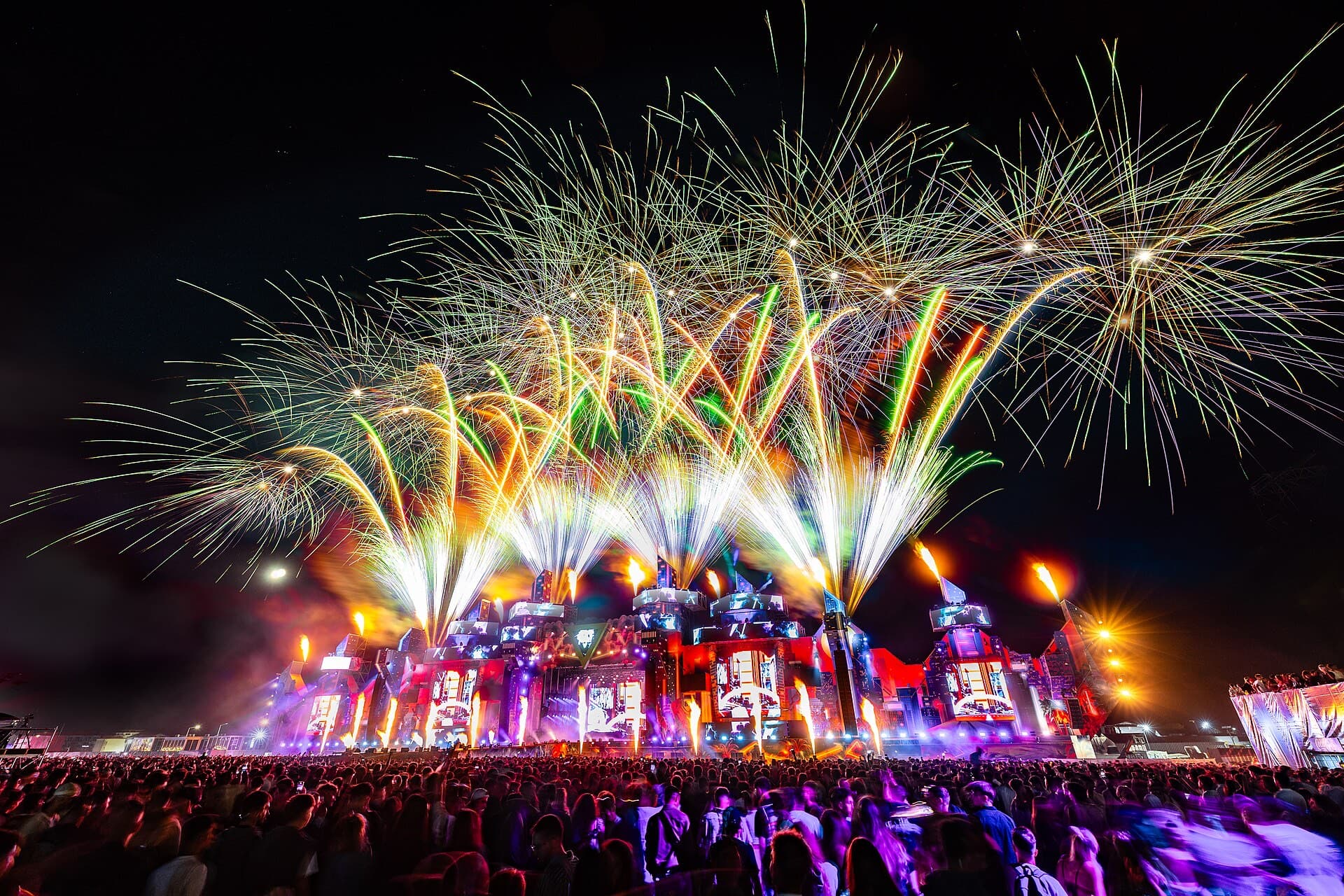
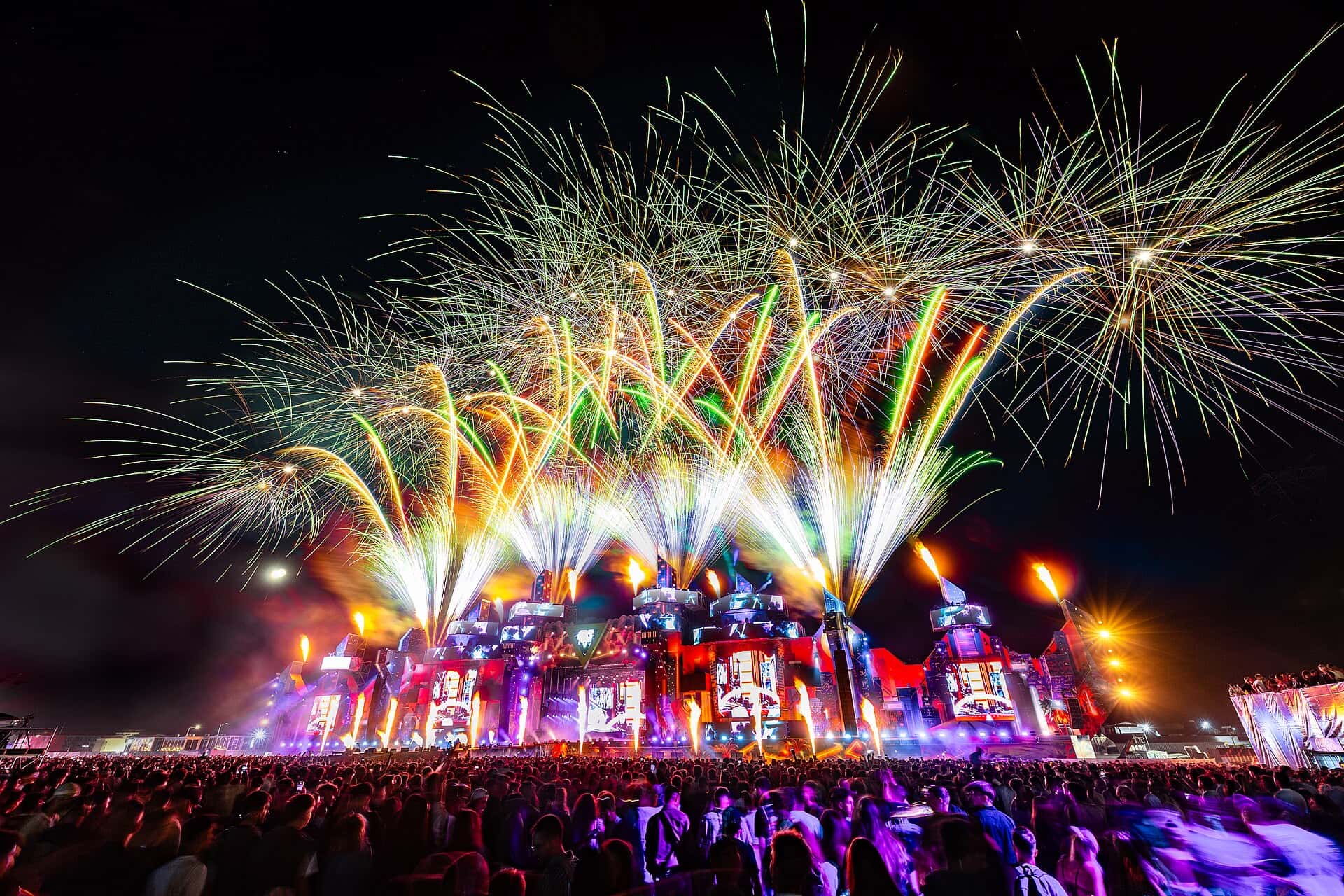
Festival Wi-Fi and internet
For festival Wi-Fi and internet you build a network for a small town in a few days. We keep payments, stages, the stream and the crew connected, even when the site is packed.
Payments that keep working
Card payments on their own network, separate from the crowd's phones.
Always online
Satellite internet, 5G and, where possible, fibre bonded together, with emergency power as standard.
The whole site covered
Cable, radio links and our own mobile network into the furthest corner.
Ready for your suppliers
Build-up within your run sheet, so bars and production can test straight away.
Engineer on site
During build-up and show days, with someone who knows your network.
Why festival Wi-Fi is different from office Wi-Fi
In an office, Wi-Fi is a matter of putting up a few access points. At a festival you build a network for a small town in a few days, on a site without a fixed connection. It has to work from the moment the first bar opens until the last act has finished. Tens of thousands of phones look for a connection at the same time, the weather plays its part and every edition the site looks different.
That is why we build festival Wi-Fi in layers. First a connection to the outside world that keeps working when one line drops out, then distribution across the whole site, and on top of that separate networks for everyone who needs to rely on it. On this page you can read how that works, what often goes wrong and what you need to arrange as an organiser.
What needs internet at a festival
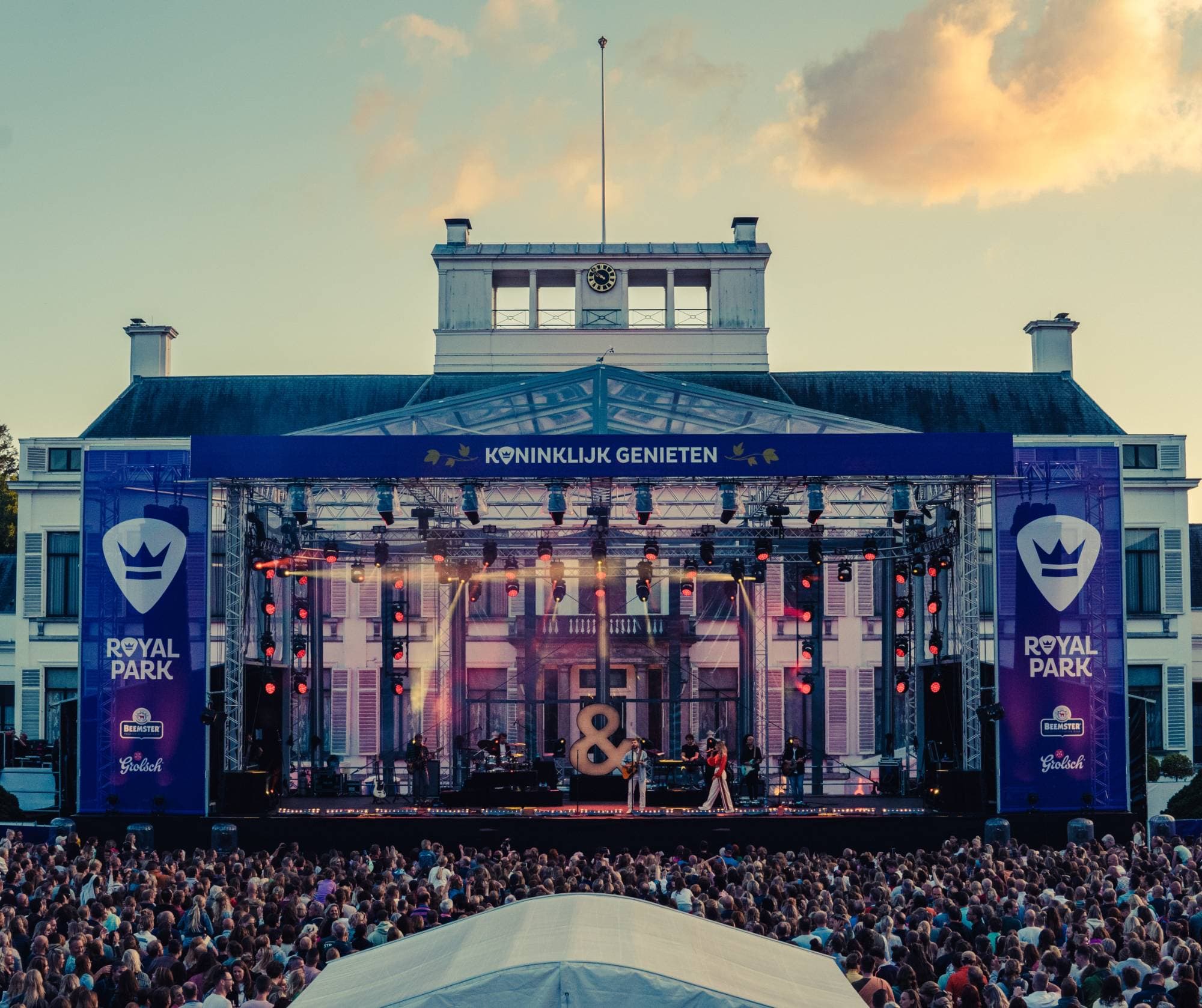
Almost everything on a festival site runs on internet. These are the parts we connect most often.
| Part | What for | What it needs |
|---|---|---|
| Bars and food trucks | Card payments and till systems | A connection at all times, especially at peak moments |
| Entrance | Scanning tickets and wristbands | Quick response, even with long queues |
| Stages | Lighting, sound, video and screens | Stable and separate from the public |
| Livestream and content | Stream, social media, footage uploads | Plenty of upload capacity |
| Production office | Email, planning, run sheet | Works throughout build-up and breakdown |
| Security and first aid | Cameras, reports, communication | Coverage across the whole site |
| Visitors | Wi-Fi or the festival app | Shielded, and not always needed |
Not every festival has all of these. A one-day festival in a city park has different needs from a multi-day festival with a campsite. In the design we start with what really has to work. Usually that is card payments, because that is where your revenue is.
What goes wrong without a proper plan
At festivals we see the same problems come back again and again.
- Card terminals on the public mobile network. As soon as it gets busy, tens of thousands of visitors are on the same mast and payments stall. Then queues build up at the bar and you lose revenue.
- One network for everyone. The livestream, the office and the tills share the same connection. When one party uses a lot, the rest notice immediately.
- One connection to the outside world. A single 4G router or one dish is a weak spot: if it drops out, everything stops.
- No emergency power. A generator that falters for a moment or a cable that gets pulled out, and the network has to restart.
- Arranged too late. Suppliers arrive and want to test, but the network is not there yet.
- Nobody who knows the network. When something fails on Saturday night, a helpdesk that calls back on Monday is no use.
How we build a festival network
The connection to the outside world
A field or beach has no fibre. We bring internet onto the site by bonding several connections: satellite internet, 5G and, where possible, fibre or radio links from partners. They work together as one connection. If one connection drops out, traffic carries on over the others. Read more about how we stay always online.
Distribution across the site
From a central point we spread the connection across the site. Close by we use cable and Wi-Fi, further away radio links and our own mobile network. That network is on air within a few hours and visitors have no influence on it: their phones are not on it, so the crowd does not affect your tills.
Separate networks
Payments, production, streaming, crew and visitors each get their own network. That way a busy livestream has no effect on the tills, and a visitor can never reach the production equipment. How we shield payments even further is explained under payments and tills at events.
All hardware is carrier-grade and built redundantly, with emergency power as standard. We monitor the whole set-up remotely and with an engineer on site.
Wi-Fi for visitors: yes or no?
Many organisers ask whether they should offer free Wi-Fi. You do not have to. Most visitors use their own mobile data. Public Wi-Fi mainly makes sense if you have a festival app that has to work, at a campsite where people stay for days, or in places with poor mobile coverage.
If you do choose visitor Wi-Fi, it gets its own network, fully shielded from payments, production and crew. We agree beforehand where coverage is needed, for example at the campsite, the food court or a chill-out area. That works better than trying to cover the entire site. Read more about good Wi-Fi under business Wi-Fi.
How we work
From request to live
- 01
Request
You send the dates, the location and what needs to be online. A site map helps.
- 02
Plan
An engineer looks at the location, chooses the connection and makes a design with a proposal.
- 03
Build-up
We build up within your schedule, with emergency power and a backup connection.
- 04
Live
During the event we monitor the network, remotely or with an engineer on site.
Build-up, show days and breakdown
The network adapts to your schedule, not the other way round. We plan the build-up into the run sheet, so the network works before the bars, till suppliers and production teams arrive. They can test straight away, and problems surface before the gates open.
During the show days an engineer who knows the network is on site, or we keep an eye on it remotely. That way we spot faults quickly. If a food truck or till has to be added at the last minute, we sort it out on the spot. After the final performance we break down within the time you have available.
People counting and cameras on the same network
You can also use the same network for safety. Using radar and ToF scanners and our own software, you see live how many people are in each area and how many are entering and leaving. Afterwards you receive reports for the evaluation and the next edition. See people counting.
AI-powered cameras count people, spot when someone climbs a fence and show where it is getting too crowded. Because they usually run on our own mobile network, you do not need to lay cables across the site. Read more under AI camera surveillance.
What you arrange as an organiser
You do not need to be a network specialist. It does help if you provide these points early.
- The dates of build-up, show days and breakdown.
- A site map with stages, bars, entrances, campsite and production office.
- The expected number of visitors per day.
- A list of suppliers that need internet, such as the till and ticketing supplier, with a contact person.
- A dry, sheltered spot with power for the central equipment.
- Whether you want Wi-Fi for visitors, and if so where.
Not sure what else to arrange? Go through our checklist for internet at your event.
Festivals we work for
Every year we deliver temporary connectivity for more than 50 projects. Under the name Virtical Event Networking we built networks for festivals across the Netherlands, and Networkguys continues that work. Festivals we work for include Dekmantel, Verknipt Festival, Zeezout Festival, Liquicity and Reggae Lake Festival.
Want to know what is possible on your site? Have a look at our temporary internet service, read how we approach internet at events, or get in touch with your date, location and expected number of visitors.
Request a quote
Quote for festival Wi-Fi and internet
Send us the dates, the location and the expected number of visitors per day. An engineer looks at your site and you then receive a proposal.
Every year we provide temporary connectivity for more than 50 projects.
Events that trust us
- Zeezout Festival
- Verknipt Festival
- Liquicity
- World Pride 2026
- Reggae Lake Festival
- Dekmantel
- Lentekabinet
- Bevrijdingsfestival
- Royal Park Live
- The Crave
- Lago Lago
- Sjef
Frequently asked questions
What organisers ask us
How much internet does a festival need?
It depends less on the number of visitors than on what has to work. Card payments use little data but must always go through, while a livestream needs a lot of upload capacity. We work it out from your site map and suppliers.
Should I offer free Wi-Fi to visitors?
No, you do not have to. Most visitors use their own mobile data. Public Wi-Fi is mainly useful for a festival app, at a campsite or in places with poor coverage. If you offer it, it gets its own shielded network.
Do card payments keep working when the mobile network is full?
Yes. Your card terminals are not on the public network but on a dedicated network via cable, Wi-Fi or our own mobile network. Visitors' phones have no influence on it.
Can this work on a site without fibre?
Yes, most festival sites have no fibre. We bond satellite internet, 5G and, where possible, radio links or fibre from partners into one connection. There does need to be power on site; our equipment also has emergency power as standard.
How long does the build-up take?
Our own mobile network is on air within a few hours. How long the full network takes depends on the size of the site. We always plan it within your run sheet, so everything works before the suppliers arrive.
How far in advance should I arrange it?
The earlier the better, especially for a large or multi-day festival. For most festivals we plan a few weeks ahead. Send us your dates and location and we will let you know what is feasible.
What does festival Wi-Fi cost?
That depends on the size of the site, the number of days, what needs a connection and whether an engineer stays on site. You receive a tailored proposal.
Also relevant for your event
Related services
- Business Wi-FiBusiness Wi-Fi and managed Wi-Fi for offices, schools, healthcare or warehouses: measured, designed and managed.
- Private LTE & 5GYour own mobile network on your own site, with guaranteed capacity and full control.
- Temporary internetFast internet at locations without a fixed line: events, relocations, construction sites and temporary premises.
- Roaming data SIM cardsSIM cards that automatically connect to the strongest network, in the Netherlands and abroad.
Get in touch with our engineers
Our team in Nijkerk is ready for you
Leave us a message. We would like to hear about your network project, your event or any other question. From Nijkerk we support organisations across the Netherlands.
Your message reaches an engineer, not a sales department.